
By Art Harman, Senior Vice President – Policy, The Conservative Caucus
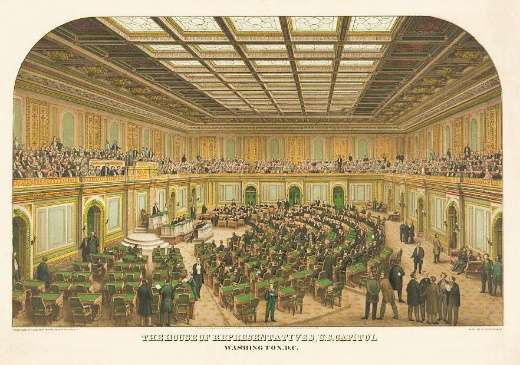
With early voting starting in just weeks, Senate Majority Leader John Thune recessed the Senate and skipped town to prevent any action to pass the SAVE America Act. They won’t return until the middle of September.
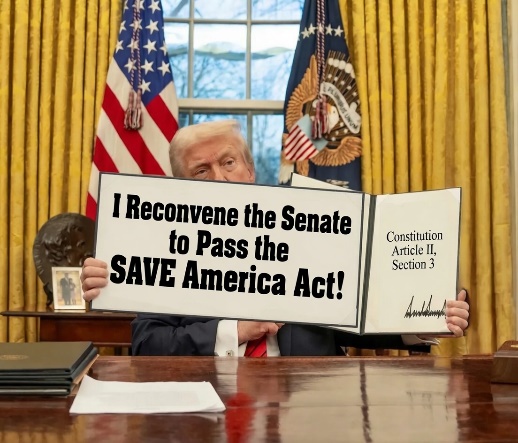
But what if President Trump could order the Senate to return to pass the bill?
He can.
Presidents have the Constitutional power to reconvene the Senate at any time for “extraordinary Occasions.”
Article II, Section. 3.
[The President] may, on extraordinary Occasions, convene both Houses, or either of them.
Given this simple but powerful tool, the President can order the Senate to return in order to pass the SAVE America Act, the ‘Reconciliation 3.0’ budget cuts or other vital legislation.
While the President can order them to return to session; the Senate decides what legislation, if any, to enact. However, President Trump can promise he will continue convening the Senate until the SAVE America Act is passed. Wear them down.
With Senators desperate to stay at home, travel the world, and for a third of them, campaign for reelection, the Democrats would actually feel the pressure to end their debate time early—pass it and return to their vacations or campaigns.
This isn’t ‘new news,’ it’s in the plain language of the Constitution.
In fact, presidents have ordered the Congress to convene almost 50 times according to a 1989 report by the Department of Justice.
This power is used for important legislation, although it hasn’t been used since President Truman; mostly because the Congress now meets almost continuously.
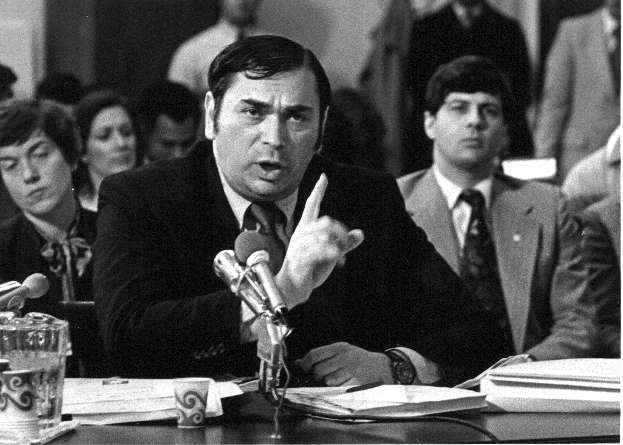
Throughout our history, presidents often called both chambers into special sessions for urgent legislative purposes.
The authority in the Constitution is specified for an “extraordinary Occasion.” Safeguarding our elections certainly is an “extraordinary Occasion.”
These have included war, economic crises, funding, considering treaties, confirming presidential nominees and other major policy measures.
Interestingly, the Constitutional power to adjourn Congress is sharply limited:
The President “in Case of Disagreement between them, with Respect to the Time of Adjournment, he may adjourn them to such Time as he shall think proper…”
So the president may in effect force them to return to work, but he can’t dismiss them unless one house of Congress refuses to adjourn or disagrees with the other on the timing of an adjournment. How might that help us?
If in the next Congress starting in January we get a new House Speaker or Senate Majority Leader who wants to pro-actively help President Trump, one of them could ‘disagree’ on the timing with the other, allowing Trump to fully adjourn the Congress.
That would allow him to make recess appointments—something that Thune has refused to allow by the subterfuge of having a Senator walk into the Senate chamber every few days and hold a fake, one-minute ‘session.’ Then walk out. Thune slow-walks confirming nominations as part of his obstructionism of the President’s agenda.
The History
Why does a president need the power to summon the Congress?
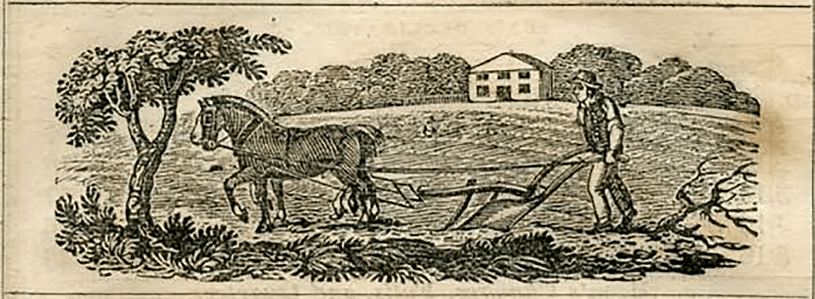
Consider how our nation was born and grew. Congress only met a few times a year and for just a few months. Travelling to Washington was also difficult.
There was no need then to pass hundreds of bills, and few if any lobbyists were begging for taxpayer funds.
Members of Congress were farmers and merchants who lived and worked most of the year at home under the laws they passed. That’s the ideal legislature! The advent of the year-round legislature in the 1940s and continuing to today invited troublemaking at taxpayer’s expense.
With this history of having a part-time legislature, you can see there would occasionally be urgent needs to convene Congress between their few meetings during the year. Even today, emergencies and other important issues sometimes can’t wait for a summer recess to end.
How does a president order Congress to return?
John Adams proclamation convening Congress became a model for later presidents.
By the President of the United States of America
A Proclamation
Whereas the Constitution of the United States of America provides that the President may, on extraordinary occasions, convene both Houses of Congress; and
Whereas an extraordinary occasion exists for convening Congress, and divers weighty matters claim their consideration:
I have therefore thought it necessary to convene, and I do by these presents convene, the Congress of the United States of America at the city of Philadelphia, in the Commonwealth of Pennsylvania, on Monday, the 15th day of May next, hereby requiring the Senators and Representatives in the Congress of the United States of America, and every of them, that, laying aside all other matters and cares, they then and there meet and assemble in Congress in order to consult and determine on such measures as in their wisdom shall be deemed meet for the safety and welfare of the said United States.
In testimony whereof I have caused the seal of the United States of America to be affixed to these presents, and signed the same with my hand.
Done at the city of Philadelphia, the 25th day of March A. D. 1797, and of the Independence of the United States of America the twenty-first.
JOHN ADAMS.
President Trump has the clear authority to convene the Senate, and must do so for this extraordinary occasion. There is no process to contest the extraordinary or emergency nature. In 1947, the Justice Department concluded that Congress cannot defeat that constitutional power even through a statute or an adjournment arrangement.
No documented example exists of either chamber refusing to convene after a President formally invoked Article II, Section 3. Every presidential special-session proclamation located in the official congressional record was followed by the summoned House, Senate, or both meeting on the specified date.
Therefore, President Trump must issue an immediate proclamation like John Adams’ that would force the Senate’s return.
And with Trump’s determination to continue convening the Senate until they pass the SAVE America Act, Democrats would be desperate to let it pass so they may resume their vacations, fundraising banquets and campaigning.
What can you do?
- Call the White House at 202-456-1414 and ask that the president use his Constitutional power to reconvene the Senate to pass the SAVE America Act.
- Share this all over the web and to your friends on social media.
- Call a talk radio show and ask people to call the White House too.
— Art Harman, Senior Vice President – Policy, The Conservative Caucus
SHARE THIS ANALYSIS
Support Independent Conservative Analysis
Your donation keeps The Conservative Caucus holding government accountable since 1974.
About the author: Art Harman is Senior Vice President – Policy at The Conservative Caucus.
About The Conservative Caucus: Founded in 1974, The Conservative Caucus is a grassroots public policy action organization. Under President Jim Pfaff, the Caucus advances free enterprise, limited government, and traditional values.
Published August 13, 2026 by The Conservative Caucus.


 Peter J. Thomas is a veteran conservative political strategist and seasoned policy expert dedicated to upholding the principles of the Constitution and democracy. As a founder and the chairman of the Conservative Caucus, he has played a pivotal role in promoting and shaping the conservative agenda across the nation for over half a century.