

The Goldwater-Thomas Report • April 2026
America’s Triumphant Return to the Moon
By Art Harman · Senior Vice President – Policy, The Conservative Caucus · April 15, 2026
America is back in outer space.
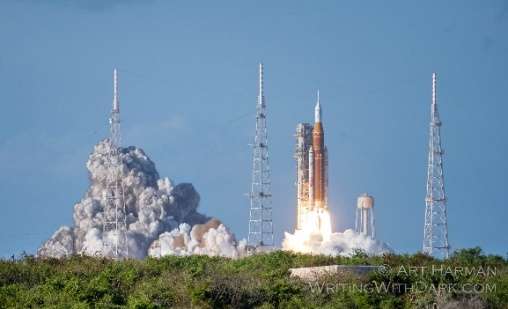
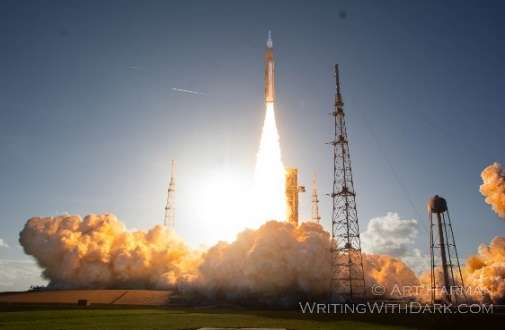
Blasting off on a picture-perfect day, the Artemis II rocket first orbited Earth before continuing toward the Moon on April 1. Three American and one Canadian astronauts then traveled further from Earth than did the Apollo astronauts.
The mission is very similar to the mission of Apollo 8 in 1968: a “shakedown cruise” to prove the spacecraft will reliably function when we land on the Moon in 2028 on a much longer mission.

After Apollo, our space program focused on the space shuttle and the space station. But the Moon seemed always out of reach until President George W. Bush started the Constellation Program — a return to the Moon with plans to stay.
But it was slow-rolled, and when President Obama was elected, he cancelled the whole return to the Moon and left us without any serious goals for space exploration outside of the space station. Obama appeared to hate American exceptionalism.
Thankfully, in 2017, President Trump rekindled the Moon program. And now we are on the road to landing Americans and building a permanent base on the Moon — and with lessons learned, we will go to Mars in the next decade.
Mission Accomplishments

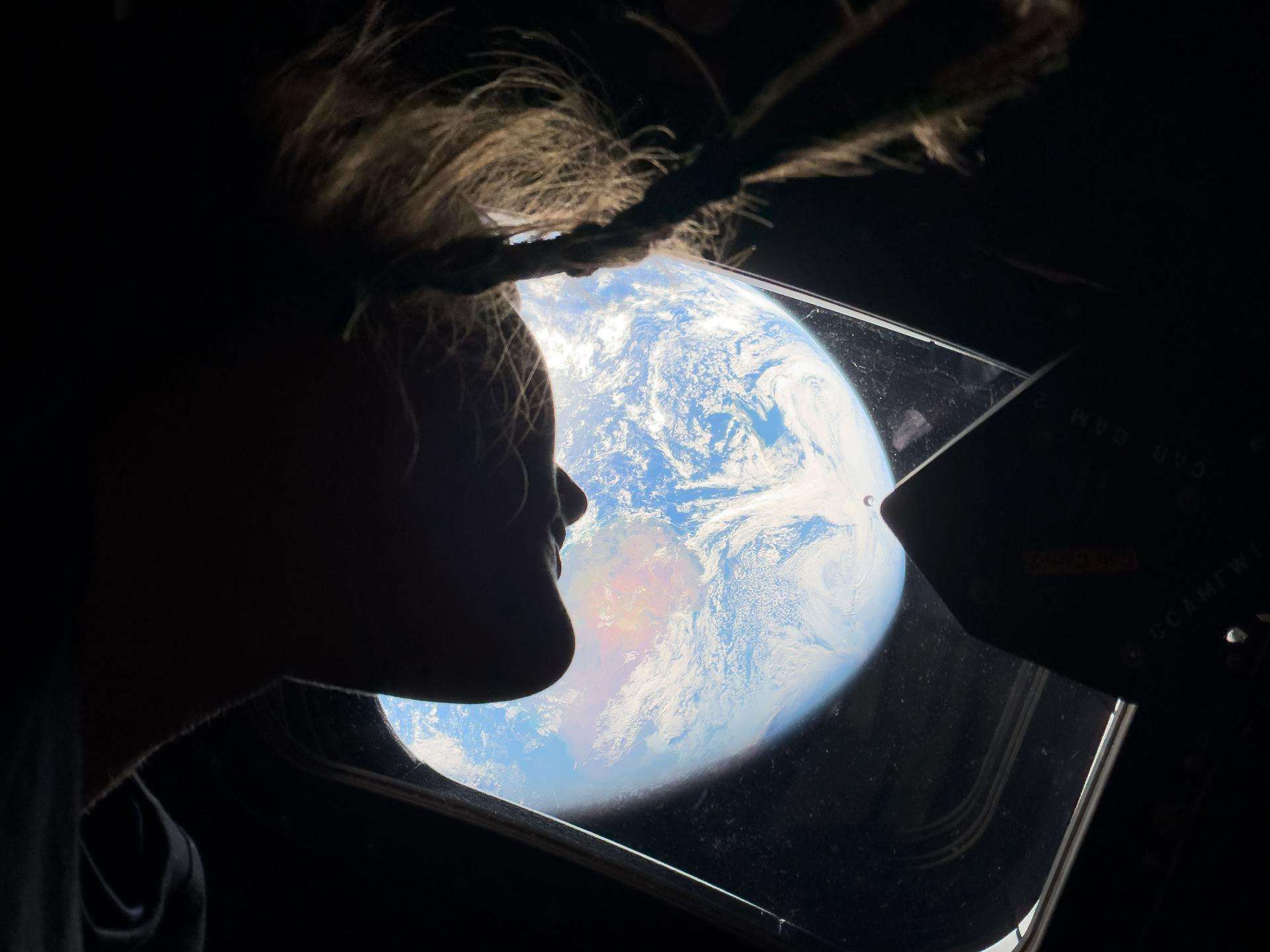
Among the amazing highlights of the Artemis crew were witnessing earth-set, seeing an eclipse of the Sun from the far side of the Moon, and taking high-resolution photographs of unusual lunar features never seen before by human eyes.
This photo is amazing because the Sun is eclipsed by Earth, and our home planet is lit only by reflected light from the Moon from behind the spacecraft. Absolutely impossible from Earth! You can see city lights, and look at both poles for the green aurora. This view shows northern Africa, a bit of Spain and the Mediterranean. Venus shines brightly at the upper left.
Beyond the stunning images, the essential part of the flight was to validate all elements of the rocket and crew capsule for upcoming missions to land on the Moon.

Every component of the rocket system worked perfectly from launch to splashdown. There was a problem with the zero-gravity toilet, but astronaut Christina Koch repaired it for use.
Before the launch, there was a serious concern about the heatshield which protects the spacecraft from the 5,000-degree-F heat of atmospheric reentry. The shield on Artemis I had suffered some damage in 2022, and Artemis II used the same design.
The engineers’ solution was for this spacecraft to enter the atmosphere with a “skip” motion to bleed off some speed so the shield would experience less heat during reentry — similar to gently braking your car from 60 to 40 before using heavy brake pedal pressure to fully stop. It worked perfectly.
A Mission of Faith
The astronauts on Apollo 8, upon reaching the Moon on Christmas Eve 1968, read from Genesis. On Artemis, American astronaut Victor Glover spoke of Christ.

“As we get close to the nearest point to the Moon and farthest point from Earth, as we continue to unlock the mysteries of the cosmos, I would like to remind you of one of the most important mysteries there on Earth, and that’s love. Christ said, in response to what was the greatest command, that it was to love God with all that you are. And he also, being a great teacher, said the second is equal to it, and that is to love your neighbor as yourself.”
— Victor Glover, Artemis II Pilot
Glover reflected on the Bible and creation:
“When I read the Bible and I look at all of the amazing things that were done for us who were created — you have this amazing place, this spaceship. You guys are talking to us because we’re on a spaceship really far from Earth, but you’re on a spaceship called Earth that was created to give us a place to live in the universe and the cosmos.”
President Trump Honored Our Astronauts
The President talked with the astronauts as they reached the Moon:
“Hello! Today you’ve made history and made all America really proud. There’s nothing like what you’re doing, circling around the Moon for the first time in more than a half a century. At long last, America is back in many ways stronger than ever. America is a frontier nation and the four brave astronauts of Artemis II really are modern-day pioneers.
“America will continue to lead the [way to] the stars. It’s an honor to speak to you and I wanted to congratulate each and every one of you.”
Following the successful return to Earth, the President congratulated the crew:
“The entire trip was spectacular, the landing was perfect and I could not be more proud! I look forward to seeing you all at the White House soon. We’ll plant our flag once again and this time we won’t just leave footprints — we’ll establish a permanent presence on the Moon and we’ll push on to Mars.
“I want to personally salute and congratulate Commander Reid Wiseman, Pilot Victor Glover, Mission Specialist Christina Koch, and [Canadian astronaut] Jeremy Hansen. And I also want to thank the entire amazing team at NASA, headed by Administrator Jared Isaacman. You’ve really inspired the entire world.”
The Robot Invasion
NASA contracted with commercial companies to send about 30 robotic spacecraft to the Moon between this year and 2029. They will deliver science payloads, communications and power systems, vehicles, and other infrastructure to multiple lunar sites. These will help prepare for the 2028 crewed landing and to help build a permanent lunar base.
The Next Artemis Lunar Missions

Artemis III will launch next year. Like Apollo 9, it will go to Earth orbit and test our lunar landers. Both SpaceX and Blue Origin are building the spacecraft that would land astronauts on the Moon, and the tests will involve docking with each and performing maneuvers.
Then, in 2028, Artemis IV and V will each land Americans on the Moon near the south pole to explore for water ice. Why ice? Water to drink, oxygen to breathe, and hydrogen and oxygen for rocket fuel. Access to possibly billions of tons of ice will make living on or visiting the Moon far more sustainable.
Following these two missions, the plans call for sending astronauts to the Moon at least every 10 months, and building a permanent research base — something like the International Space Station on the surface, with astronauts visiting for months at a time.
Perhaps as soon as 2030, NASA’s Space Launch System rocket used for this month’s mission will be replaced by all-commercial systems, likely from SpaceX and/or Blue Origin. That could mean astronauts launching on a Starship to orbit carrying 100 tons of people, equipment, vehicles and habitats. They will refuel the spacecraft, then fly directly to and from the Moon and land at the Kennedy Space Center. This would eventually be more like routine airline service than rare launches on disposable rockets.
America’s Free-Market Future in Space
Let’s look beyond NASA’s missions to the Moon. There will always be a need for scientific exploration in space and the giant labs that bring down-to-earth advances, and to maintain a national presence to deter China or other adversaries from denying the free world and commercial access to space.
However, the 2030s will bring a spectacular “gold rush” of commercial space enterprises. Lunar mining for rare minerals and helium-3 — important for nuclear fusion reactors — will become serious industries.
Tourism will become a massive industry. Modern cruise ships cost about $2 billion to build and make serious profits. That’s an example of how the economics of space tourism may develop by using reusable spacecraft such as SpaceX’s Starship and future competitors.
Within 15 years, you may be able to go to orbit and watch the Earth from above for the price of a luxury cruise. For somewhat more, you could stay in an orbital hotel for a week.
And perhaps five or ten years later, tourists will be able to land on the Moon for a few days to take their first step — to honor Neil Armstrong’s “one small step for a man.”
You can imagine a lunar Olympics — where people could fly with wings in the low gravity and do other stunts only possible on the Moon. Senior citizens with limited mobility may retire to the Moon, where they may experience a renewed lifestyle.
On to Mars!
Many know Elon Musk is eager to go to Mars and to build a colony. Working with the expertise of NASA and Musk’s own resources, Americans will go to Mars in the early 2030s.
With lessons learned on the Moon, where rescue is possible and supplies can be delivered in days, missions to Mars will become more safe.
The lessons are not trivial. Both the Moon and Mars have extremes of temperature, radiation, micrometeoroids and toxic dust. The habitats must be buried for safety, and extreme measures must prevent dust from getting into habitats and destroying equipment.
Further, it takes 6–9 months to journey to Mars, and unlike the Moon, you must wait many months before being able to return from Mars — the planets must align for the journeys.
In a decade, there will be faster “nuclear-electric” spacecraft that will let astronauts travel to Mars in half the time. Such spacecraft will also allow astronauts and robots to travel to the Jupiter and Saturn systems. You can’t land on those, but you can land and explore on a few of their moons.
Thank you to President Trump for rescuing the return to the Moon in 2017 and sending our astronauts back to the Moon. American exceptionalism took us to the Moon with Apollo, and now returns us to the Moon — and eventually to Mars.
— Art Harman, Editor, The Goldwater-Thomas Report
The Goldwater-Thomas Report Leadership
PUBLISHER: Barry M. Goldwater Jr. is Honorary Chairman of The Conservative Caucus. He served 14 years as a member of the U.S. Congress, and is the son of the late Senator Barry Goldwater Sr., who was the first presidential candidate of the modern conservative movement. Goldwater Jr. followed in his father’s footsteps as a conservative leader. He is a graduate of Arizona State University.
CHAIRMAN: Peter J. Thomas has been TCC’s Chairman since 2011, and served on the board starting at our founding in 1974. He founded and served as President of the Massachusetts Foundation for Economic Research, was chief of staff to Congressman Peter Torkildsen, and served under President Reagan and both Presidents Bush.
PRESIDENT: Jim Pfaff is the President of The Conservative Caucus. Jim’s political career stretches over three decades. He was Chief of Staff for Congressmen Thomas Massie (R-KY) and Tim Huelskamp (R-KS). He also served as the Chief of Staff for the Colorado House Republican Caucus, Founder and Executive Director of Americans for Prosperity of Colorado, President of the Colorado Family Institute, and a National Representative for Family Policy Councils at Focus on the Family.
EDITOR: Art Harman is TCC’s Senior Vice President for Policy. He served as a Legislative Director in Congress where he developed the successful strategy to kill the 2013 Senate amnesty bill, wrote legislation and amendments, and learned from the inside how Congress really works. He advised the 2016 Trump campaign on border security, international broadcasting and space policy, as well as with the transition and White House.
SHARE THIS ANALYSIS
Support Independent Conservative Analysis
The Conservative Caucus has been fighting for constitutional principles, American sovereignty, and American exceptionalism since 1974. Your donation helps us continue bringing you the truth the mainstream media won’t report.
About The Conservative Caucus: Founded in 1974, The Conservative Caucus is a grassroots public policy action organization dedicated to preserving American sovereignty, constitutional liberties, and traditional values. Under the leadership of President Jim Pfaff, TCC continues to fight for the principles that made America great.
This analysis is an issue of The Goldwater-Thomas Report, a publication of The Conservative Caucus. By Art Harman, Senior Vice President for Policy and Editor.


 Peter J. Thomas is a veteran conservative political strategist and seasoned policy expert dedicated to upholding the principles of the Constitution and democracy. As a founder and the chairman of the Conservative Caucus, he has played a pivotal role in promoting and shaping the conservative agenda across the nation for over half a century.